

What are the causes of hair loss?
It is every woman’s biggest nightmare: hair loss! For many beauties, hair is (almost) everything. Yet more than half of women in the Netherlands experience hair loss or thinning hair. And make no mistake, hair loss in women can happen at any age, even in your twenties! Hair loss occurs during different stages of a woman’s life. In this blog, we discuss some causes and tips that can help prevent and treat hair loss and thinning hair.
Hair loss: What does it do to you?
Whether you like it or not, the image of a bald man is pretty much accepted as normal in society. And of course, most men would rather not be bald. But men are more likely to accept their new look, and do so sooner, than women. If you are a woman experiencing excessive hair loss, it can have a major impact on your self-image. You feel insecure and worried. This brings stress, which does not help your hair growth! All in all, hair loss can have a major impact on you!
When is hair loss really a problem?
Every woman has a period when she loses more hair than usual. When is hair loss greater than normal? If you have been experiencing hair loss for an extended period - longer than 6 weeks - (on average more than 100 hairs per day), it may no longer be normal shedding. We therefore recommend contacting your doctor.
What are the signs of extreme hair loss?
Hair loss in women
- Thinning hair
- Hair loss lasting longer than 6 weeks (more than 100 hairs)
- Hair is thinning
- A mix of thinning and thick hairs
Hair loss in men
- Receding temples
- Receding hairline
- Hair is thinning

What are the main causes of hair loss?
Besides the common hair loss that is genetic and therefore originates from within, diffuse hair loss also occurs in women. This is also known as telogen effluvium.
Diffuse hair loss
Telogen effluvium is a symptom (phenomenon) and does not yet indicate the underlying cause of hair loss. Telogen effluvium refers to significant or extreme hair loss due to a disruption in the hair growth cycle. The most harmless form of diffuse hair loss in women is seasonal hair shedding. In spring and fall, there may be periods when more hair falls out, and this recovers in summer and winter. Hair loss after pregnancy is also a normal phenomenon that lasts for a few months. After that, the hair recovers!
1) Hair loss during and after pregnancy
If you’re pregnant, you probably have thicker, fuller hair than usual. When your baby arrives, you often lose that “extra hair.”
Why does your hair fall out after giving birth? And is there anything you can do about it?
Many women’s hair becomes thicker and more beautiful during pregnancy. This is thanks to the female hormone estrogen. Estrogen keeps around 95% of your hair in the growth phase during pregnancy. Normally, 85-90% of your hair is in the growth phase. Since women have an average of 100,000 hairs on their head, this is a significant increase! When estrogen levels in your blood drop around the birth of your baby, your hair enters the resting phase and then the shedding phase. As a result, you suddenly lose quite a lot of hair. Its texture also changes. No worries. This is normal. After 6-8 months, the normal hair cycle returns. For 80% of women, hair loss stops after about four months.
It’s important to keep giving your hair the right hair care. Choose hair care that’s designed to prevent hair loss. The Mediceuticals brand focuses on treating a broad spectrum of scalp problems. They also know that there are different types of scalp problems and causes that can lead to hair loss. They have different product lines specifically for different scalp problems. It’s definitely a great brand if you suffer from hair loss or other scalp problems.
Neofollics also has a range focused on hair loss, with proven results. You could also use UKLASH hair vitamins or Becosme vitamin patches to stimulate hair growth. That way, you can also treat your hair from within.
Shop for your post-pregnancy hair care at johnbeerens.com
2) Does stress affect hair loss?
Stress puts your body in survival mode. This can have all kinds of negative effects on your health. And yes, hair loss is one of them. Severe stress causes your hair follicles to enter a resting state. The hair essentially dies. The main culprit here is cortisol, better known as the stress hormone. Cortisol, in turn, causes an overproduction of lactic acid, which damages the hair. The hair roots are affected, and the hair becomes thinner and/or falls out. The result: large clumps of hair in your brush and shower drain. Hair loss often occurs in certain areas of your scalp. In severe cases, this can even lead to bald patches.
Each hair follicle has its own cycle of growth, transition, rest, and shedding. Stress reduces the number of hairs in the growth phase and shifts them into the resting phase. No one really knows the complex biology behind hair growth. What we do know is that stress speeds up the hair cycle and moves the hair into the telogen phase. Don't worry, this doesn't have to be permanent and doesn't lead to baldness. “Telogen effluvium usually occurs within the first three months after a stressful event or period. This could include a divorce, moving, stress related to children or work. Hair loss is usually a sign that a new hair is growing from the follicle of the lost hair. So three to six months after the hair loss, you should see a new hair appear.
If you want to take better care of your hair during stressful times, browse our hair loss category and choose the right hair care products to stimulate hair growth. Choose a hair vitamin together with hair care that gives your hair a boost.






3) Underactive thyroid
An underactive thyroid, also known as hypothyroidism, can cause hair loss.
What's the link between an underactive thyroid and hair loss?
As small as it may be, the butterfly-shaped thyroid gland regulates your energy balance and physical growth. When there's a shortage of thyroid hormone, your metabolism slows down. This negatively affects bodily functions. If you have an underactive thyroid for a long time, hair loss can occur.
How can I recognize hair loss caused by an underactive thyroid?
We already discussed so-called diffuse hair loss. This spreads across the scalp. You'll notice that your hair is thinning. Sometimes, bald patches can even appear. Hair loss caused by an underactive thyroid can look different for everyone.
Will the hair grow back?
If you're taking the right dose of thyroid medication, your hair growth will usually recover. Certain hair growth products can also help with this process. Browse our hair loss category for products to help with hair loss.
4) Chemotherapy and hair loss
Hair loss is the best-known and most visible side effect of chemotherapy. Chemotherapy is actually an umbrella term for treating cancer with so-called cytostatics. Cancer cells divide very rapidly. Cytostatics are medicines that destroy rapidly dividing cells or slow their growth. Unfortunately, these medicines also affect other healthy cells that divide rapidly. The cells in your hair follicles that are responsible for hair growth are one example. This is what causes hair loss after chemotherapy. Chemotherapy affects not only your hair but also your scalp, making it drier and more sensitive. This can lead to flaking. We recommend caring for your hair before chemotherapy with the right hair care products. They help keep your hair and scalp in top condition. Choose a sulfate-free shampoo; sulfates can be harsh on hair that is thinning from chemo. With some chemotherapy treatments, your hair does not fall out, but it may become thinner or duller. Your doctor can best tell you how much hair you are likely to lose. During chemotherapy, it's important to treat your hair gently. Don't wash it too often, and always use a soft, mild shampoo. If you use a hair dryer, set it to the lowest temperature. Avoid drying it out with sun exposure, coloring, or perms. It's also best to avoid curlers and stiff brushes. Choose a soft brush instead. Hair loss often begins 2 to 3 weeks after the first chemo treatment. For some people, hair loss happens gradually; for others, large clumps fall out all at once. By their second chemo treatment, most people are already wearing a wig or scarf.
When does hair grow back?
Your hair starts to grow back after chemotherapy. For some people, it grows back immediately; for others, it takes 1 or 2 months. But it's also possible for your hair to start growing back during chemotherapy. This often happens just before or during your final chemo treatment.
What does hair look like when it grows back?
Hair that grows back after chemotherapy often looks different at first. Its color may have changed (often becoming darker), and its texture may also be different than before. People who had straight hair before chemo sometimes get curls, or vice versa. Sometimes this is only temporary, and your original locks return after a few months to a year. Sometimes these changes are permanent. Everyone experiences hair growth after chemo differently. Some people find their new hair thicker and coarser, while others find it thinner and weaker. Other factors also affect your hair's texture, such as hormone therapy for breast cancer.
shop shampoos that are free of sulfates and parabens
5) Hair loss due to improper hair treatments
Treating your hair incorrectly can also lead to hair loss. We often see women experiencing hair loss as a result of improper hair treatments. These include overly tight hairstyles and harsh chemical treatments, such as coloring or bleaching, using relaxers, or wearing overly heavy extensions. Choose hair care that makes your hair happy. Look for hair products without sulfates and products that help prevent hair loss. Brushing your hair too roughly can also cause you to lose more hair than usual. Choose a high-quality brush, and give your hair some extra care by using, for example, a serum or leave-in product. If you’re experiencing hair loss due to an improper hair treatment, your hair has been through a lot. Kérastase has a hair serum specifically for hair loss. This strengthening hair serum is for weakened hair. It improves your hair and helps it look visibly fuller.
6) Hair loss during menopause
Your hair can behave quite unpredictably during menopause. It may become thinner, fall out, or grow in places where you don’t want it. During menopause, estrogen production decreases. Your hair follicles need estrogen for your hair to grow. As estrogen levels fall, your hair follicles have less estrogen available. Your hair then gradually falls out. Sometimes it can happen suddenly, too. Hair loss doesn’t just affect the hair on your head. It can also occur elsewhere on your body. Some women lose entire clumps of hair when washing or brushing it, or even notice bald patches!
Be kind to your hair. Wash it with a gentle, nourishing shampoo without fragrance or sulfates. Prevent tangles and avoid brushing your hair too roughly. Remember that coloring, however much you enjoy it, increases the risk of hair loss. Give yourself a scalp massage from time to time, too. This stimulates blood flow to your scalp. It not only feels wonderful, but also promotes hair growth!
7) What can hair vitamins do to combat hair loss?
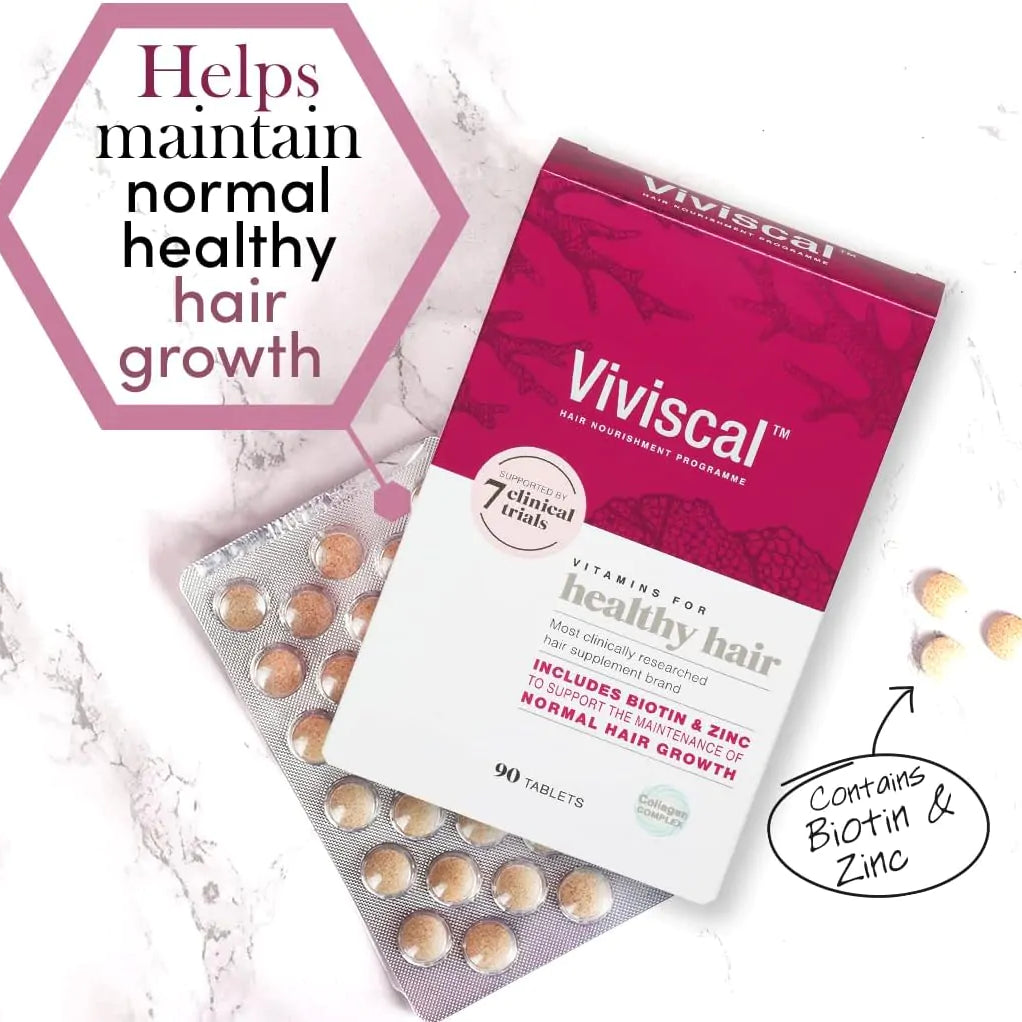
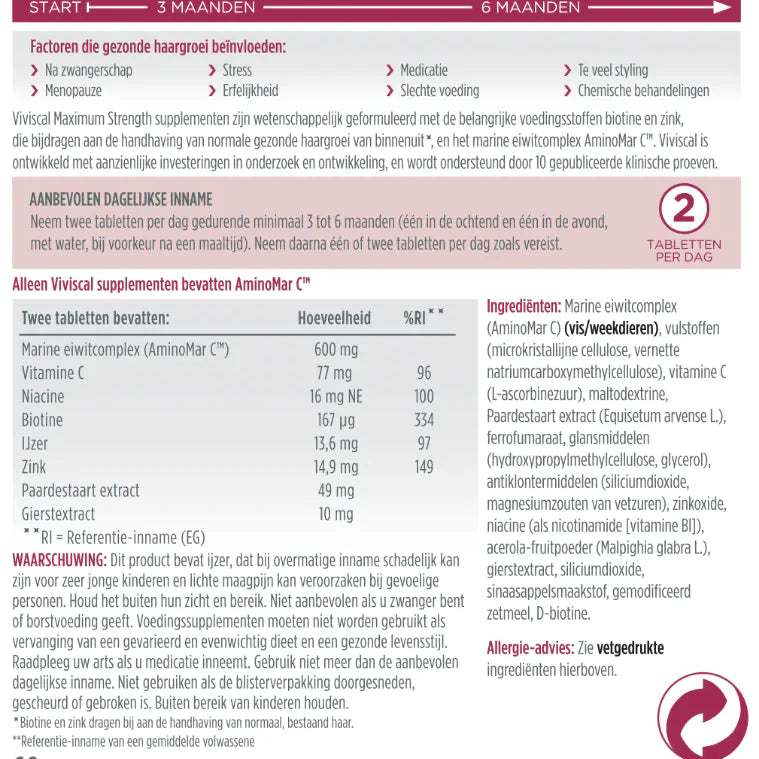
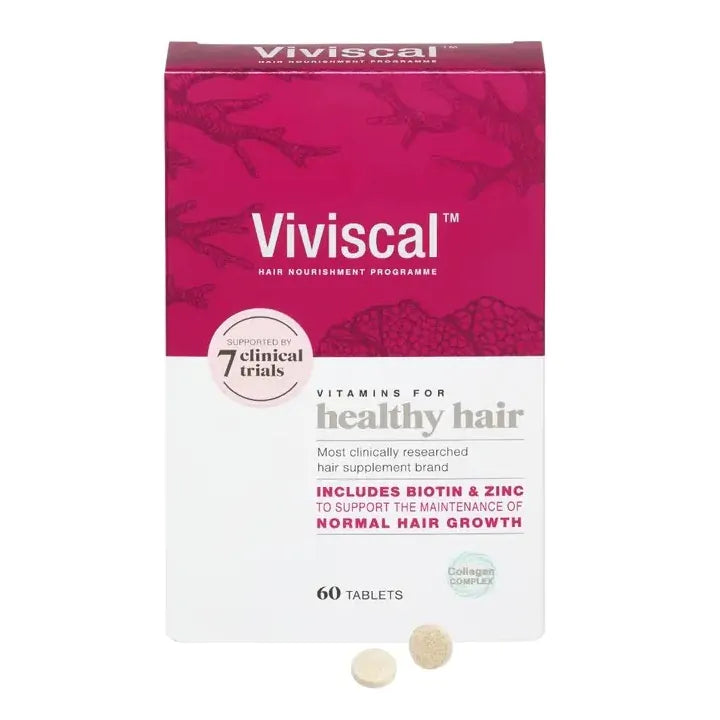
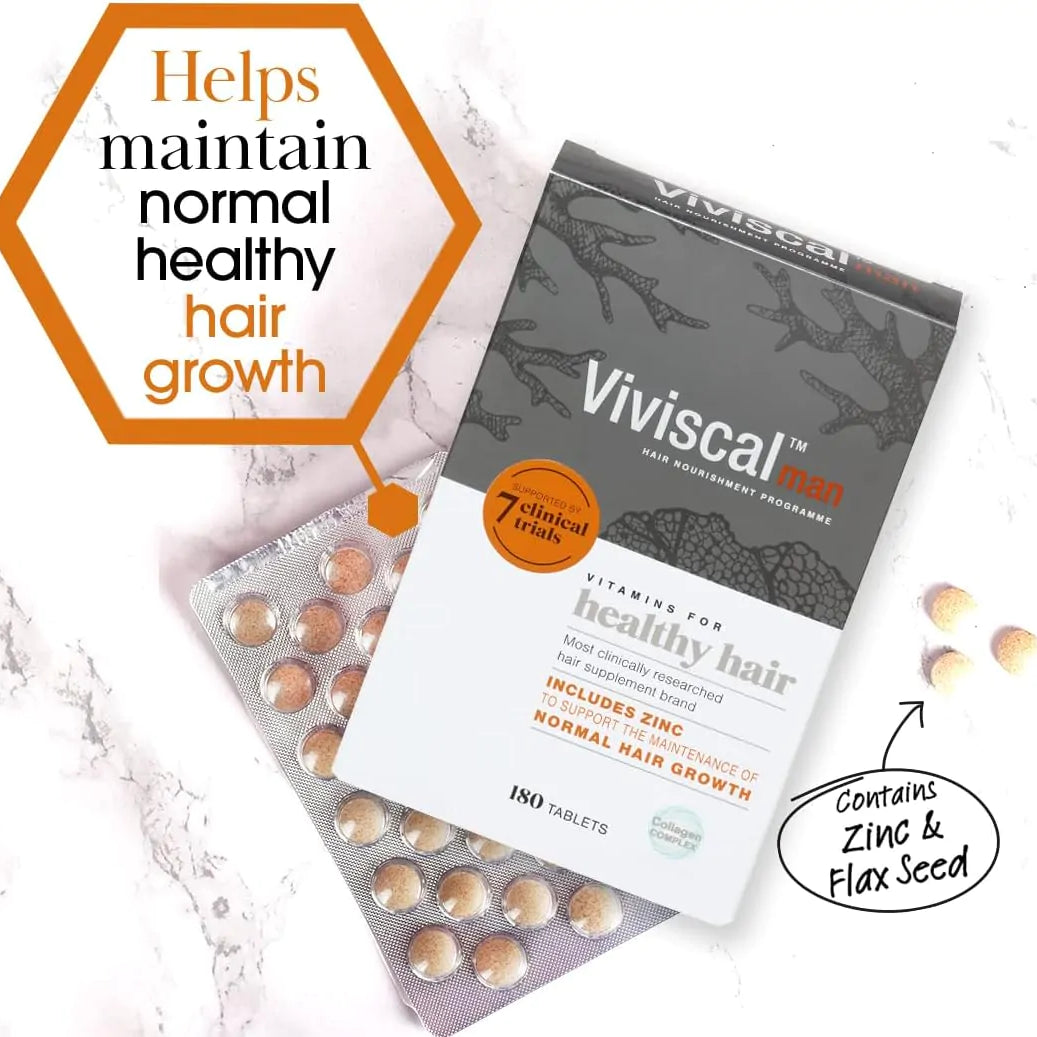
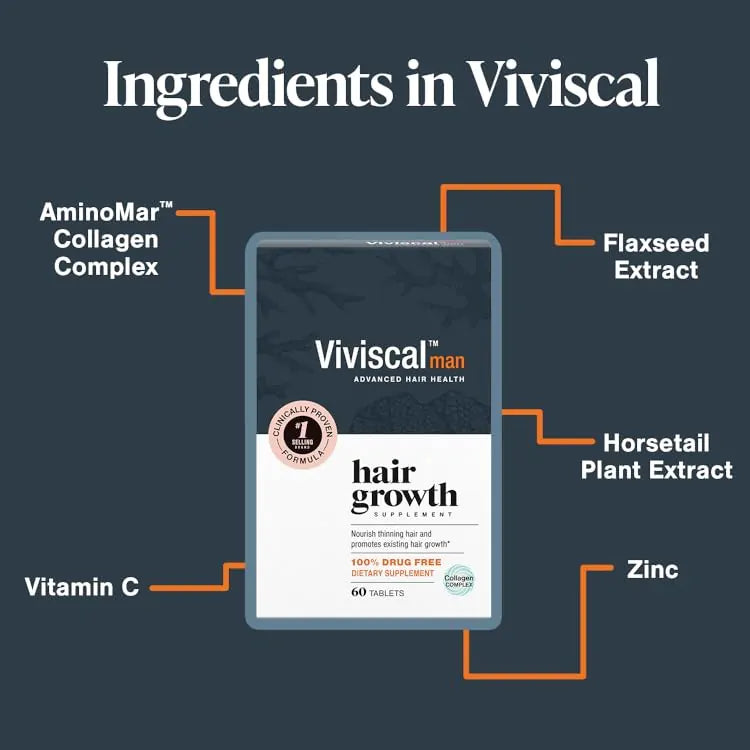
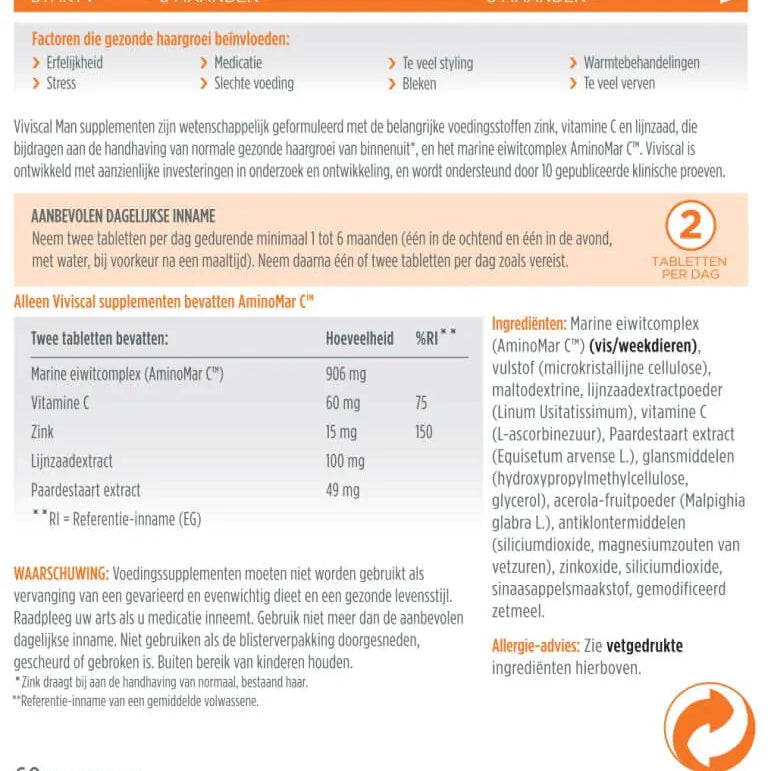
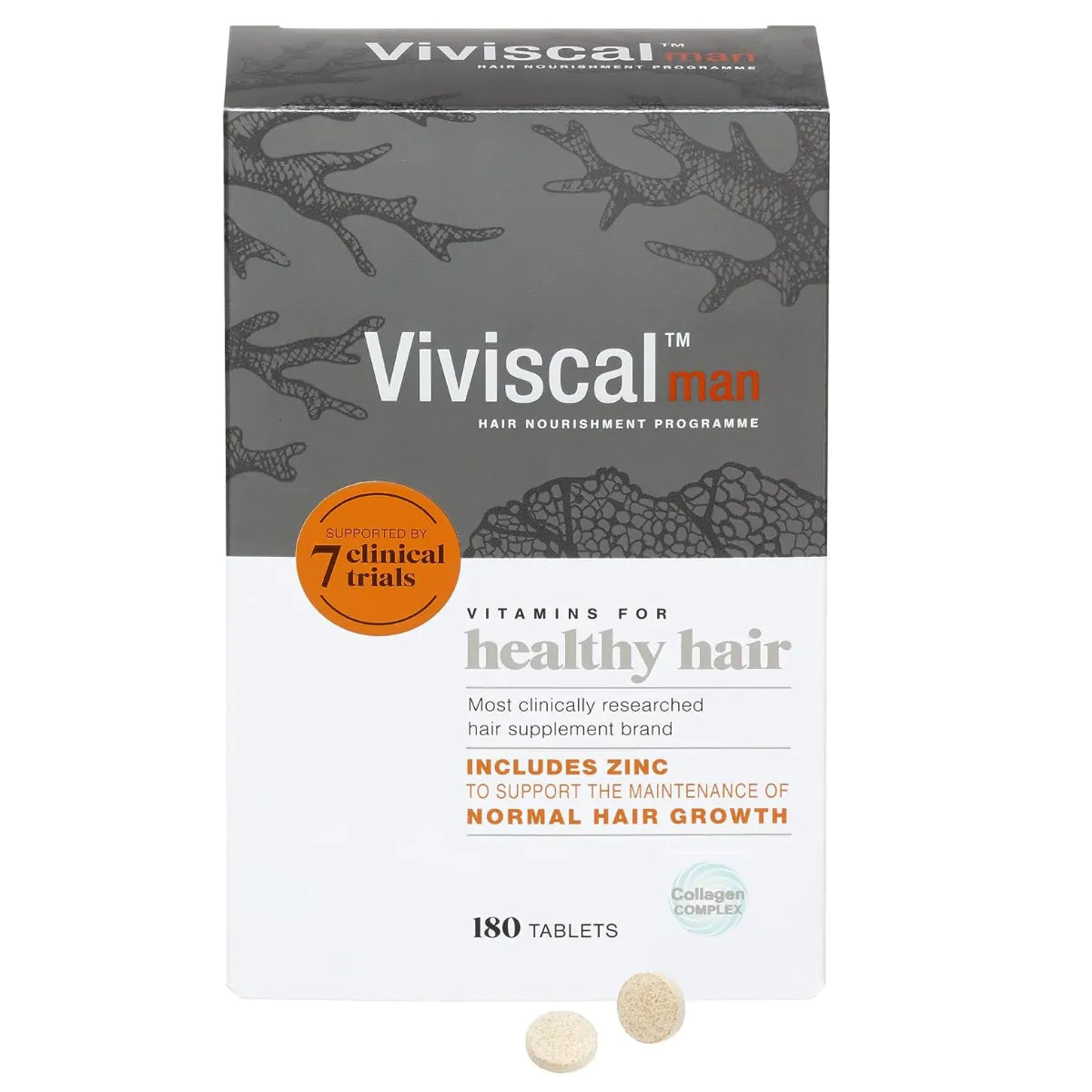
Many people underestimate the importance of a healthy diet and getting the nutrients needed for hair growth. These are important factors for healthy, strong hair growth. A deficiency in iron, vitamin B, silicon, zinc, or omega-3, for example, can lead to slower hair growth. Hair also becomes less shiny and strong. If these deficiencies are not addressed, they can eventually lead to (severe) hair loss. One vitamin that is often mentioned is biotin, or vitamin B8. Biotin is used to promote hair growth and contributes to strong, healthy hair. Our Western diet does not always provide all the nutrients we need for healthy, strong hair. To support hair growth, it may help to add hair vitamins to your diet. We’re especially fond of Oase. Monica Geuze also uses these hair vitamins and loves them. The most important thing is to have a balanced diet!
8) Hereditary hair loss
Hereditary hair loss is the most common form of hair loss. It is caused by the hormone dihydrotestosterone, also known as DHT. This hormone causes the hair follicles to shrink. As they shrink, hair growth becomes increasingly thinner until the hair follicles are too weak to produce any more hair. This leads to bald patches on the scalp.
Hereditary hair loss in women
In the Netherlands, around 3-6% of women under the age of 30 experience hereditary hair loss. Of women over 70, around 1 in 3 experience hereditary hair loss. Hereditary hair loss in women generally develops differently than in men. Hereditary hair loss in women can be recognized by the hair on top of the head gradually becoming thinner. Hair loss often begins around the center part and gradually widens. Unlike men, women often do not develop completely bald patches. The front hairline also usually remains intact. Hereditary hair loss cannot be prevented, but you can suppress it with products that contain DHT blockers.
Hereditary hair loss in men
For men in the early stages of hereditary hair loss, it can help to use hair growth products such as the hair products from Neofollics or Mediceuticals. In our hereditary hair loss category, you’ll find all our products that can help address this hair problem.
9) Experiencing hair loss since having COVID?
Since the arrival of the coronavirus, there has also been another cause that can lead to hair loss. If you're experiencing hair loss due to COVID, there are also a few things you can do to combat it. Earlier in the blog, we discussed so-called telogen effluvium. This can be caused by COVID-19 and can therefore lead to increased hair loss. It's incredibly frustrating to experience this during and after having COVID, but it's not permanent (Thank God). Once your body has recovered from the virus, your hair cycle will return to normal too. We've also mentioned that stress can affect hair loss. So try not to worry too much about it, and make sure to get plenty of rest and relaxation. Also, use products that help combat hair loss, so you lose as little hair as possible because of it.
Stimulate hair growth with Neofollics
You've seen the brand mentioned a few times in this blog, but what exactly is Neofollics, and why does it help combat hair loss? The brand focuses on thinning hair and hair loss. Neofollics is an expert in hair loss, and uses its expertise to develop the best and most effective products to stimulate hair growth. The products are high quality and help prevent hair loss for both women and men. Neofollics products contain no harmful substances such as SLS, other sulfates, silicones, or parabens.

Order hair care for hair loss at JohnBeerens.com
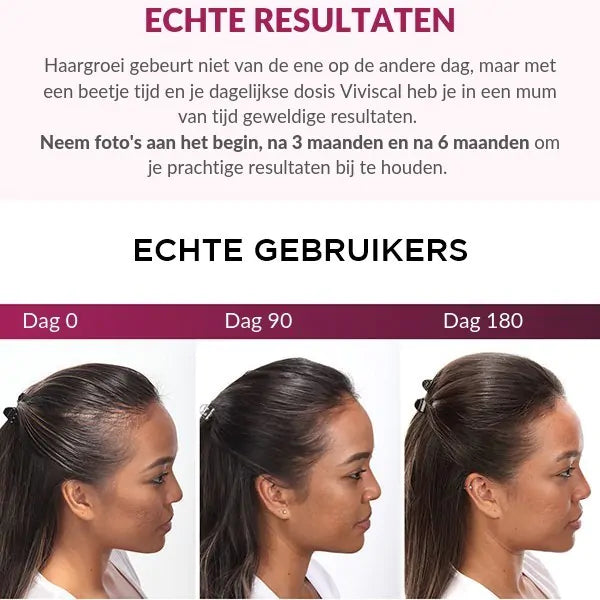
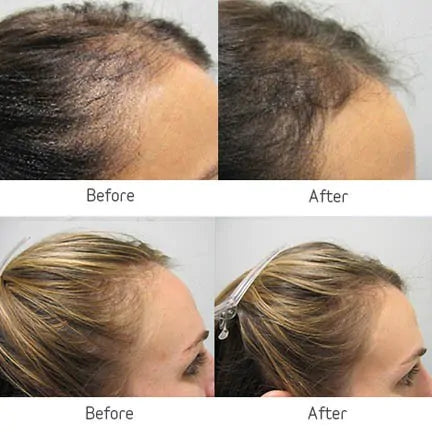
After reading this blog post about hair loss, you probably don't think, "Yes, that's me." Luckily, at JohnBeerens.com, we have an extensive range of hair growth products. Keep in mind that your hair loss won't stop the day after you start using hair growth products. The first results usually become visible after a few weeks to a few months. Want to combat your hair loss? Order the hair care that suits your hair concern from us! If you're still unsure about what's causing your hair loss, always consult your doctor or dermatologist first for the best advice.


